Fine wine market rebounds after years of decline—here's what's driving the recovery
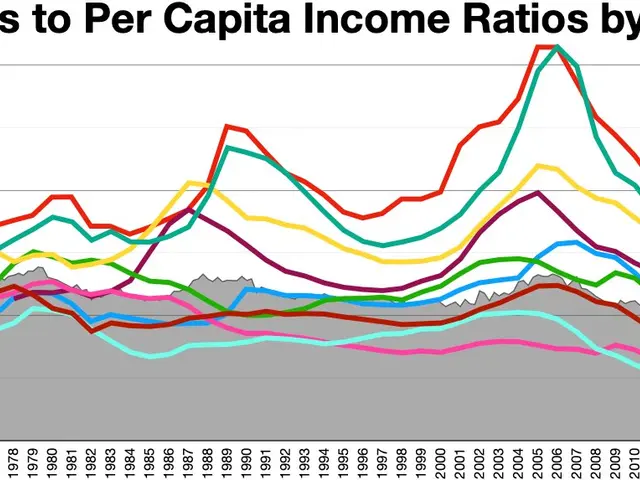
Fine wine has had a difficult few years, with prices tumbling. Having hit an all-time high during the lockdowns of the pandemic - demand went through the roof whilst we were all stuck at home treating ourselves to better bottles - the market then gave way to the longest correction in history. Three years of falling prices driven by China's sluggish post-pandemic recovery, disastrous en primeur (new vintage release) campaigns, and US tariff uncertainty.
Prices started rising again in late 2025; a trend that looks likely to continue helped along by an EU trade deal with India - one of the fastest growing fine wine consumers on the planet - which will see import duty slashed. A similar mobilisation of wine buyers in China in 2008 saw prices soar by several hundred percent.
So right now, at the bottom of the dip, would seem an excellent moment to make an investment or re-stock the cellar. Here are my top 10 tips for those who may be completely new to wine investment, or who are dab hands. One suggestion, though: if you buy wine as an investment and keep it at home, it's important you don't drink it.
Bordeaux
- Chateau Pape Clement 2020 - £40 per bottle in bond. Gorgeous, jammy Pessac-Leognan from a magical vintage with high 90s scores from most critics. Timing is everything. This wine came to market en primeur in the final throes of that crazy covid market at over £60. Today it's yours for just £40. It's one of the greatest current bargains in the entire wine market. This particular bottle requires patience, however, as it won't be ready to drink until at least 2030, but it feels to me like it will be sporting a three-figure price tag by then.
- Pontet Canet 2018 - £65 per bottle in bond. In the 1980s, Pontet Canet had fallen so far from grace that it was the plonk you were served on an SNCF train, the French equivalent of an intercity. Today, under new management and utilising biodynamic farming techniques, it is one of the most consistent, desirable and investible Bordeaux wines. It's fantastic too - this 2018 is all flowers, truffles and spicy wood. And at £65 it is an utter bargain. The similarly acclaimed '16 is (just) into its drinking window and already nudging £100. The '09 and '10 add another £30. This one's next.
- Chateau d'Yquem 1996 - £120 per bottle (37.5ml). Admittedly these are half size bottles, but it's not often you can get the best of the best at this price point - Yquem being the undisputed world heavyweight champion of dessert wines. And at 30 years old, this one's just getting into its stride. Expect orange marmalade and wild honey in spades. And now that it's firmly into its prime drinking window, expect prices to shoot up too. No hurry to drink up, either - this stuff will outlive us all.
- Lafite Rothschild 2006 - £370 per bottle in bond. Investing in First Growths isn't as straightforward as it seems. The 'brand bonus' is all too often fully built into the price, and you're generally better off with something further down the food chain. Not so here. 2006 was a funny vintage where critics couldn't quite agree on whether it was stellar or middling-to-fair. Regardless, Lafite was outstanding, once garnering 97 points from His Royal Bobness, wine guru Robert Parker. From a high of over £700 to £370 today, the value is outstanding for such a highly rated First Growth - but be warned, at 20 years old the corks are being pulled and it's disappearing fast. Prices will only go one way.
Italy
- Tenuta Sette Ponti 'Oreno' 2020 - £40 per bottle in bond. The SuperTuscans - a band of DOCG (Denominazione di Origine Controllata e Garantita) rule-breaking Italian rebels and mavericks - have been one of the great investment success stories of recent time. Most Sassicaias (the ultimate Super Tuscan vintage), for example, have doubled or even trebled in value in recent years, and now sit in Bordeaux First Growth territory. Even historically accessible Tignanello is now into 3 figures. Wonderful Oreno is, qualitatively, easily their equal but currently bringing up the rear pricewise. Act quickly - it won't stay an outlier for long.
- Tignanello 2023 - £90 per bottle in bond. To frame the SuperTuscans in the terminology of Bordeaux, Masseto would be a Petrus, the most famous and sought-after of French wines, and therefore in standalone price territory. Sassicaia, by contrast, would be a First Growth. And Tignanello is the very best of the Super-Seconds. On that basis, I'd suggest there's another £50 of growth available here to close the ratio to more Bordeaux-esque terms before Tig even breaks into a sweat. Don't worry that you missed it at £60 per bottle. As one of the most recognisable brands not just of Tuscany, but of the entire wine universe, this has some way to go.
Champagne
- Piper Rare 2006 - £73 per bottle in bond. One of the most beautiful bottles of any wine, let alone just Champagne. A visual showstopper, but one that manages to remain elegant and graceful, avoiding the gaudy shoutiness of certain other gold bottled fizzies folk are drinking. The quality is there to back it up, too. And the market is noticing. Claiming an ever-elevated place amongst Champagne royalty, this is certainly a sparkler to punt on. Less than a third the price of '06 Krug, and for the moment even cheaper than the less special Dom Perignon.
- Taittinger Comtes de Champagne 2013 - £93 per bottle in bond. Not your Tesco Taittinger, this, but their flagship. Rarer than Dom Perignon, better than Cristal. Understated sophistication. Rarely do I get more astonished glances into the glass than when I serve this wine - surely this can't be Taittinger! This glorious 2013 is an oh-so complex explosion of apricots, hazelnuts and lemons. As one of their latest offerings (these wines stay on the lees for an incredibly long time) this was released in tricky times and sits as quite the bargain at a price below £100.
Napa
- Spottswoode, Cabernet Sauvignon, St Helena - £108 per bottle. Napa wines, from the Napa Valley in California, have a nasty habit of commanding prices of several hundred pounds. Often four figures. Ouch. So it's refreshing to find a renowned and sought-after offering at such a bargain price - relatively speaking, of course. With critic scores in the very high 90s across the board, this vintage is a very special drop. It's notable that vintages of a similar quality but with a bit more age are closer to £200. That's surely where this wine is headed.
- Opus One - £231 per bottle in bond. Higher end Napa wines often stack up as investible on paper, but they can have a tricksy secondary market because of their tiny productions and cellar-door distribution models. In plain English, they can be hard to sell and often catch out the unwary. Opus One is different. With its Mouton Rothschild affiliation and Place de Bordeaux distribution, Opus trades as well in the secondary market as any old-world offering. This is First Growth Bordeaux quality and desirability for half the price.
- Bonus Outlier Chateau Latour 1982 - £1,900 per bottle. Ahem. A 'little' out of budget for most of us mere mortals. But whilst it might seem nonsensical to recommend anything at this price for investment, I reckon this has got plenty left in the tank. '82 Latour is a contender for the title of the greatest Bordeaux ever made, and features on every well-heeled oenophile's to-die-for list. Price growth will be driven by extreme and increasing rarity as the last of the available stockpile is rapidly consumed. Condition varies wildly at this age, but there's a rare mint case available right now on Squelch.
Pro tips: If your interest is exclusively for investment, then how you store matters for resale. Buy only sealed cases and store in an HMRC bonded warehouse (in bond). Remember to factor in ownership costs. It's £80 or so to store & insure a case of wine for 5 years regardless of value. So your £200 Pape Clement has to go some just to cover these costs from its profits. That's why most investment wines are north of £1,000 per case. Avoid Burgundy for now. It's a house of cards. If you're a drinker and the investment angle gives you the perfect excuse to buy wines at a price you otherwise couldn't justify, go ahead and get them delivered to your home. Drink half and sell the rest on a peer-to-peer platform. If you catch the next Sassicaia and it doubles in value, you're drinking for free.