Mexico's hidden rental crisis leaves millions relying on informal housing
Finding an apartment to rent in Mexico without paying exorbitant upfront costs is almost a matter of luck, housing experts say, citing factors like a severe shortage of listings on real estate agencies and online platforms.
Compounding the problem, much of the available housing is advertised only with handwritten signs in windows or through word of mouth.
Mexico's Infonavit housing institute conducted a study comparing data from real estate platforms with figures from the National Household Income and Expenditure Survey (ENIGH) 2024, published by the National Institute of Statistics and Geography (Inegi), to analyze the rental housing market. The findings revealed that online listings show significantly higher rents, as posted prices reflect landlords' asking rates—though in practice, tenants often negotiate lower payments.
According to Infonavit, Mexico had 6 million rental homes in 2024, yet some states have virtually no listings online. When limited to apartments, tenement units, or rooftop rooms, the number drops to just 2 million rentals.
Marisol Becerra, a senior real estate consultant at Monopolio, explained that her firm tracks major Mexican property portals, identifying roughly 44,700 rental listings—a mix of houses and apartments.
"This isn't a full market census," she clarified. "It's a snapshot of what's actively advertised online."
"To put it in perspective, the ENIGH 2024 reports 6 million rental homes nationwide. If we focus only on apartments, tenement units, and rooftop rooms, the total is 2 million. So what appears on digital platforms represents less than 1% of the actual market. In other words, what we see online is just the tip of the iceberg of a much larger, mostly hidden market."
Stark Price Disparities
On pricing, Infonavit compared inflation-adjusted rents from the 2020 National Housing Survey (ENVI) with digital listings and found that online platforms consistently show higher rates.
The average rent in the ENVI data was 3,400 pesos, while online listings averaged 25,200 pesos, according to Infonavit's 2025 Digital Rental Housing Market Report.
Becerra confirmed the disparity is both real and measurable.
"The gap is massive," she stressed. "The median rent in the ENVI is 2,300 pesos per month, compared to 22,000 pesos on portals—nearly ten times higher. The ENVI average is 3,400 pesos, versus 25,200 pesos online. And in the real market captured by the ENVI, 75% of households pay 3,400 pesos or less."
These figures reveal two parallel rental markets, Becerra noted.
In Monopolio's sample, only 3% of rentals cost less than 5,000 pesos monthly, while 76% exceed 15,000 pesos.
"The median in our data is 24,000 pesos," she said. "What portals capture is the high-end segment."
The Search Struggle
Ludovic Prades, director of operations at Homie, a rental platform, argued that Mexico's rental market suffers from a lack of digitization.
"If you look at São Paulo, you can go to Brazil's largest portal and find 100,000 apartments for rent in a city of 9 million. But in Mexico, if you check Inmuebles24, the biggest platform, there are only 9,000 listings. The difference isn't just availability—it's digitization."
"In Mexico, you don't find rentals online; you find them by walking down the street and spotting a handwritten sign. That creates inefficiencies because instead of browsing a website, you have to physically search."
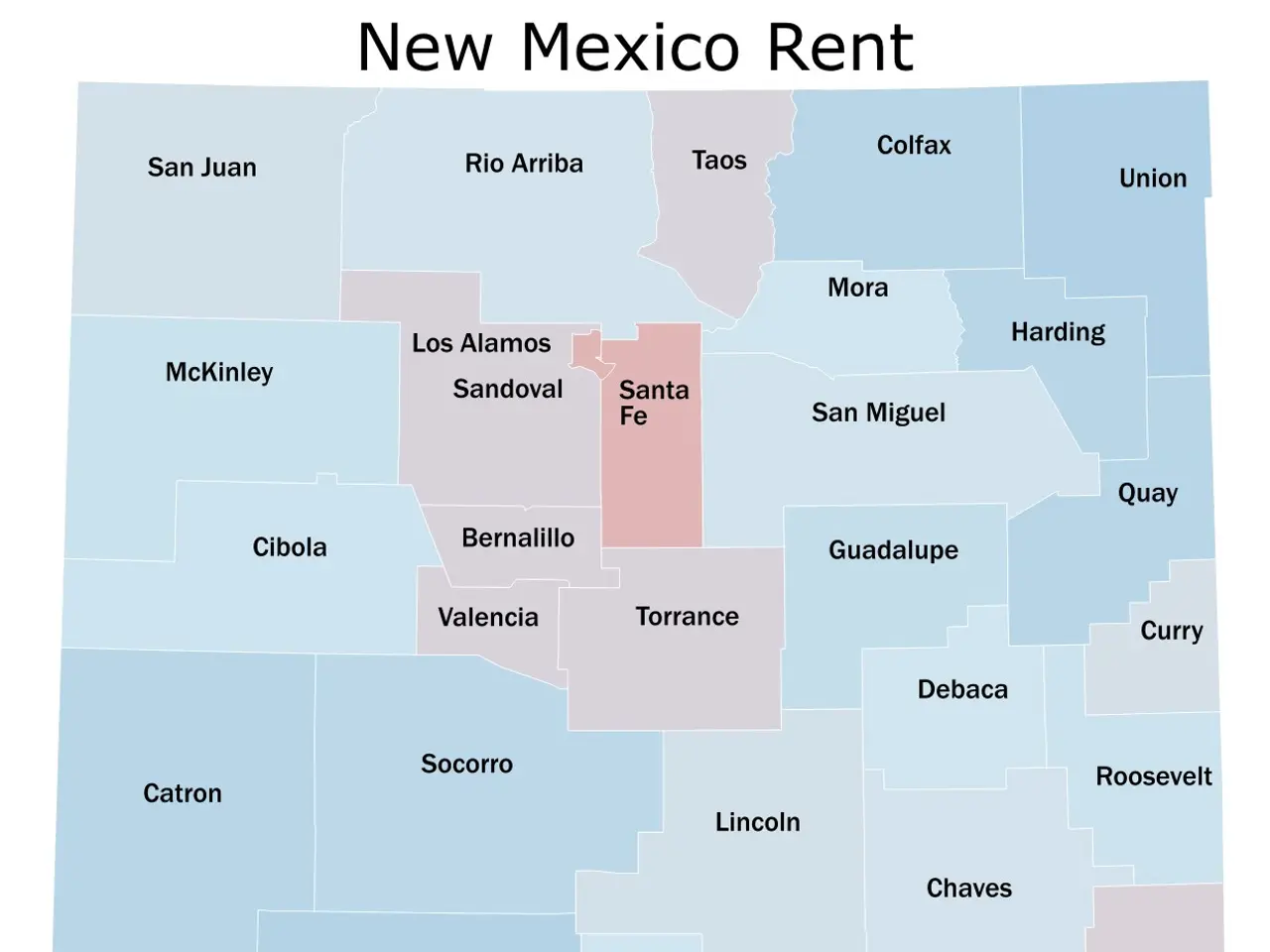
Moreover, online listings are heavily concentrated. Monopolio's data shows that just six states account for 71% of Mexico's rental housing: Mexico City, Nuevo León, Yucatán, Querétaro, Jalisco, and the State of Mexico.
Infonavit's findings align closely: 73% of digitally listed apartments are in six states, led by Mexico City (30%), followed by Jalisco and Querétaro (20.5%), Nuevo León (9.6%), the State of Mexico (8%), and Quintana Roo (5%).
"This shows that the digitization of rental listings correlates with more formal markets—areas with stronger economic activity and professional developers," Becerra concluded.
The homes listed on real estate platforms tend to be new or nearly new, mostly two-bedroom properties with parking and amenities. They cater to middle- and upper-middle-class buyers—not the affordable housing segment.