
Breakthrough 0D/2D Hybrid Device Revolutionizes Optoelectronics with Dual-Mode Functionality
Scientists have developed a new optoelectronic device that combines zero-dimensional (0D) and two-dimensional (2D) materials in a single structure. The breakthrough uses spatial asymmetry to create a dual-mode system capable of switching between different functional states. This innovation could lead to more adaptable and efficient technologies in imaging, sensing, and communication.
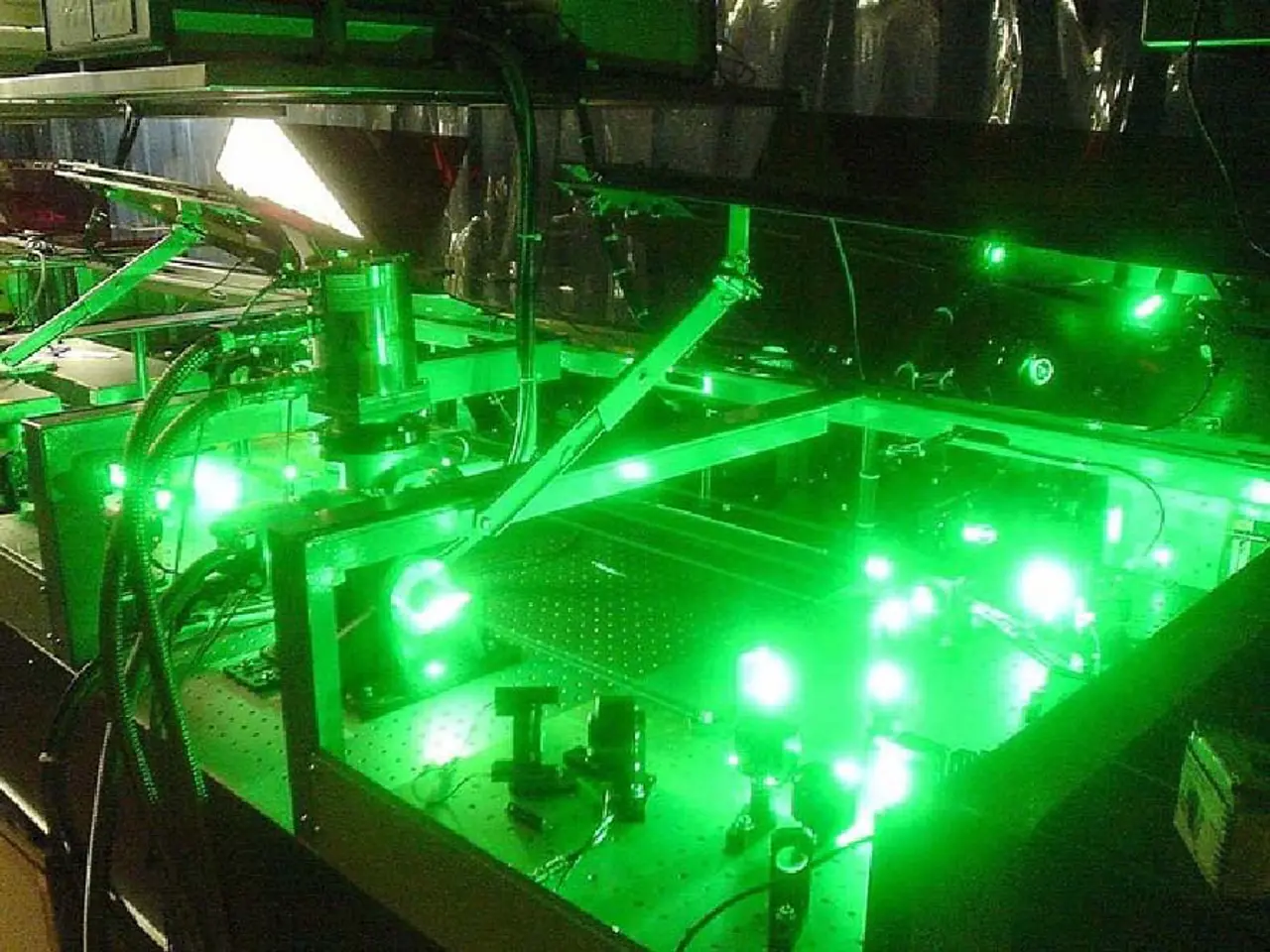
The device was created using in situ microzone femtosecond laser deposition, a technique that allows precise control over material composition and structure. By directing ultrafast laser pulses, researchers avoided thermal damage while maintaining the delicate properties of 2D materials. This method also ensures high reproducibility, making it easier to scale up production.
Spatial asymmetry within the device plays a key role in its performance. It influences how excitons separate, how charges recombine, and how photogenerated carriers move directionally. These adjustments give the device enhanced sensitivity, faster response times, and greater stability compared to traditional optoelectronic components.
One of the most notable features is its dual-mode operation. The device can shift between distinct optoelectronic responses depending on external signals or environmental changes. This adaptability suggests future applications in programmable systems that adjust their behaviour dynamically.
Testing has already shown promising results. Prototypes demonstrated over 90% efficiency in lab settings, particularly in photodetectors for high-speed imaging and spectral analysis. Researchers at universities in the US and China have trialled the technology in 2024–2025, with further potential in flexible solar cells, wearable health monitors, secure optical communication (Li-Fi), and quantum sensors by 2026.
The new 0D/2D hybrid device marks a step forward in optoelectronics, offering better performance and versatility than conventional designs. Its scalable production method and proven efficiency in real-world tests open doors for advancements in fields like medical diagnostics, renewable energy, and data security. Further development could see these devices integrated into everyday technologies within the next few years.